King Uriens
Le Morte d'ArthurKing Uriens of Gore is a British king, the husband of Morgan le Fay and father of Sir Uwaine. His place in the story is shaped by overlapping political and family ties: he joins the coalition of kings resisting Arthur, later appears in Arthur’s company, and becomes the intended victim of Morgan’s household conspiracy. His survival depends on Uwaine’s intervention, while the consequences of the plot reach beyond his marriage to divide Arthur’s court.
Identity and Family
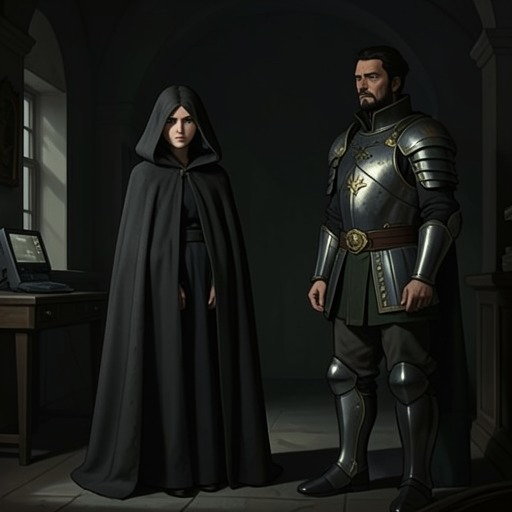
Uriens is identified as a king of Gore and as Uwaine’s father. His marriage to Morgan links him to Arthur’s family: Morgan is Arthur’s sister, and the narrative describes her as Uriens’s wife. The marriage places Uriens within the kinship network surrounding Arthur’s rule, even as the loyalties within that network become unstable.
Morgan’s history helps explain the unusual position of Uriens’s household. She is sent to a nunnery for schooling, where she learns necromancy, and is subsequently married to Uriens. The account presents her as both a royal relative and a powerful practitioner of magic; Uriens’s marriage therefore connects him to one of the story’s recurring sources of danger at court.
King and Political Ally
Uriens is among the eleven kings who swear to join forces against Arthur. The kings’ common cause arises from the affront suffered by the six kings at Carlion; they enlist five more rulers and swear not to abandon one another until Arthur is destroyed. Uriens pledges six thousand armed horsemen, the largest single contingent specified in the list. The combined force is reported as fifty thousand mounted men and ten thousand on foot, and it moves against Bedegraine, a castle held for Arthur.
That allegiance does not define every later encounter between the two kings. After the coalition’s conflict, Uriens is found in Arthur’s company on a hunt with Arthur and Accolon. The three pursue a hart so far that their horses die beneath them. They then enter a richly furnished ship that arrives at the water’s edge; after a supper and a night’s lodging, Uriens wakes in Camelot beside Morgan, though the previous evening he had been far away. Arthur, by contrast, wakes in a prison. The abrupt separation makes Uriens’s unexplained return to his wife an important contrast with Arthur’s capture, but the passage does not establish that Uriens arranged or understood the enchantment.
Morgan’s Conspiracy and Uwaine’s Intervention
Morgan’s treason against Arthur becomes explicit when Accolon confesses that she intended to have her brother killed. The episode links Uriens’s family to a larger plot: Morgan’s designs against Arthur are not an isolated court grievance, and her attachment to Accolon accompanies her effort to remove Arthur. Uriens is not identified as a participant in that scheme.
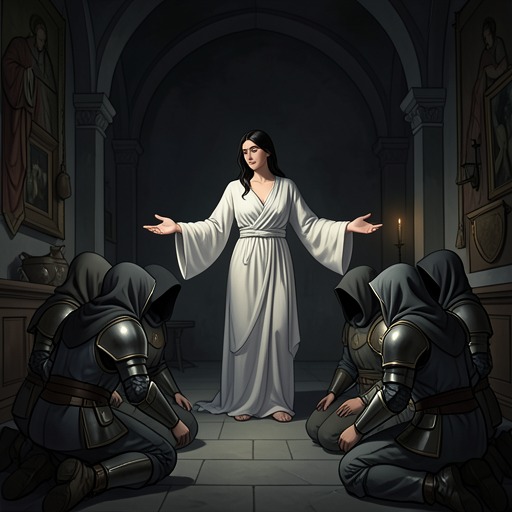
Morgan also resolves to kill her husband while he sleeps. Believing Arthur dead, she asks a trusted maid to fetch Uriens’s sword and says she has never seen a better opportunity to strike. The maid warns that killing Uriens will leave Morgan unable to escape, but Morgan sends her for the weapon nonetheless. The plan is discovered when the maid finds Uwaine asleep in another chamber, wakes him, and tells him what his mother intends. When Morgan takes up the sword and approaches Uriens’s bed, Uwaine catches her hand before she can strike.
Uwaine confronts his mother and threatens to treat her as an enemy if she were not his mother. Morgan asks for mercy and says she was tempted by a devil; she promises not to attempt such deeds again and begs him to preserve her reputation by keeping the matter secret. Uwaine agrees to forgive her on the condition that she never again undertakes such acts. Uriens is thus saved not by his own action in the scene, but by the intervention of his son and the private bargain that follows.
Consequences at Arthur’s Court
Arthur later tells Uriens that Accolon confessed Morgan had sought to destroy both Arthur and Uriens. Arthur says he does not greatly suspect Uriens of complicity, but he does suspect Uwaine and orders Uriens to put his son out of court. The distinction is consequential: Uriens is treated as an ally who may be excused, whereas Uwaine bears the immediate punishment despite having prevented his father’s murder.
Gawaine refuses to accept Uwaine’s expulsion alone, declaring that whoever banishes his cousin will banish him too. The two depart together for a forest and lodge at an abbey. Uriens’s household crisis therefore becomes a rupture in Arthur’s fellowship: the rescue that preserved Uriens’s life does not prevent the rescuer’s exclusion from court, and Arthur’s suspicion carries the conflict into the relationships among the knights.
The account also places Uriens among the company attending the burial of the twelve kings. He comes with Morgan, identified there as Arthur’s sister, and the four sons of Morgause are present as well. The burial scene recalls the political violence that has brought the kings together in death, while Uriens’s appearance beside Morgan keeps their marriage within the story’s account of Arthur’s royal kin and its unsettled loyalties.